A unified data layer AI approach gives intelligent agents reliable access to connected business information. Without unified data layer AI, agents may use incomplete records, conflicting values, or outdated details. As a result, their answers become weaker. Their automated actions may also create costly mistakes.
What Is a Unified Data Layer?
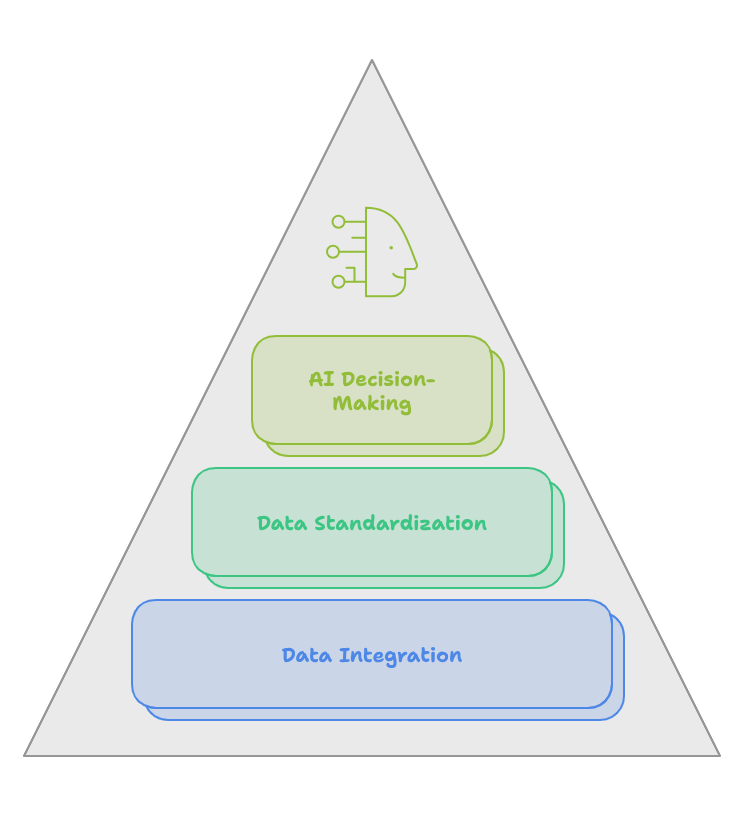
A unified data layer connects information from different systems within one consistent structure. It does not always replace existing applications. Instead, it helps those applications share trusted information.
This explains why AI agents need unified data layer foundations. An agent cannot make informed decisions when important customer details remain separated. It needs relevant context from every approved source.
One Trusted Version of Business Data
Different departments often save different versions of the same record. Sales may have one phone number. Finance may have another. Support may use an outdated company name.
A unified layer can match, clean, and standardize those records. Therefore, the agent receives clearer information. This is one reason why AI agents need unified data layer support.
Benefits of Unified Data Layer for AI Systems
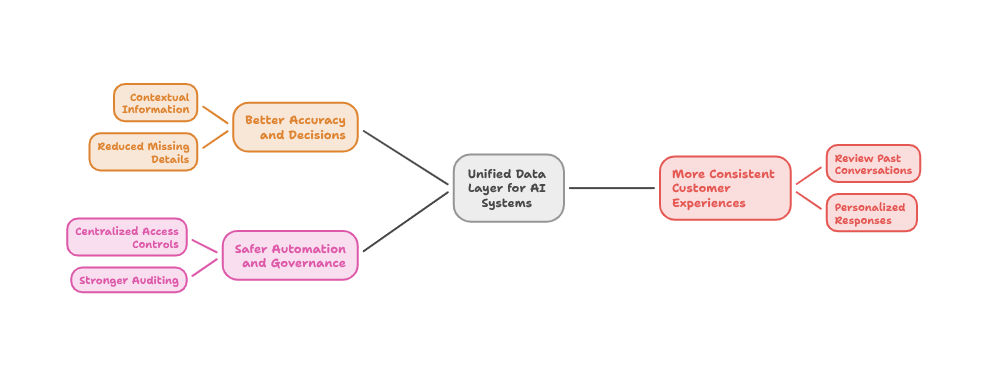
The benefits of unified data layer for AI systems go beyond basic access. A strong layer improves accuracy, automation, governance, and reporting. It also helps businesses scale AI with fewer data problems.
Better Accuracy and Decisions
Many teams ask how unified data improves AI agent accuracy. The answer starts with context. An agent can only judge a situation using the information it receives.
Connected data reduces missing details and conflicting signals. Therefore, the agent can produce more relevant answers. It can also recommend safer next steps.
This highlights the benefits of unified data layer for AI systems. Better input usually supports better output. Even a powerful model struggles with poor information.
More Consistent Customer Experiences
Customers expect businesses to remember past conversations. A unified layer lets agents review purchases, tickets, preferences, and previous messages.
This shows how unified data improves AI agent accuracy during customer interactions. The agent understands the situation before suggesting an action.
For example, a customer may contact support about a delayed order. The agent can review payment status and previous messages. It can also check delivery updates and earlier complaints.
Therefore, the response becomes more personal and useful. The customer does not need to explain the entire situation again.
Safer Automation and Governance
AI agents may update records, send messages, assign tasks, or trigger workflows. These actions require reliable permissions and clear business rules.
A unified layer can support centralized access controls. Teams can decide which information an agent may view. They can also limit which actions it may complete.
The benefits of unified data layer for AI systems also include stronger auditing. Teams can review the information behind an automated decision.
This visibility helps managers identify errors. It also makes AI adoption easier across regulated or sensitive business processes.
Zoho Analytics AI Agent Data Architecture
A Zoho Analytics AI agent data architecture can connect reporting data from several business applications. These sources may include CRM, finance, marketing, support, and custom tools.
Connected datasets support dashboards, analysis, and AI-driven workflows. However, the design must match business goals and security needs.
A useful Zoho Analytics AI agent data architecture should define data ownership, refresh schedules, and access rules. It should also include quality checks. These controls keep information useful for employees and AI systems.
Why Clear Structure Matters
Agents need clear relationships between customers, deals, invoices, tickets, and campaigns. Good structure reduces confusion between similar fields.
For example, one customer may appear under several names across different applications. The data layer should connect those records correctly.
Otherwise, the agent may treat one customer as several separate accounts. This creates inaccurate reports and poor recommendations.
A well-designed Zoho Analytics AI agent data architecture helps prevent these issues. It gives the agent a clearer view of business relationships.
Practical Use Case: Customer Retention
Consider a software company using CRM, billing, support, and product analytics tools. The company wants an agent to identify customers at risk.
Without connected data, the agent may only review support tickets. It could miss failed payments, low usage, or upcoming renewals. Its risk score would remain incomplete.
With a unified data layer AI setup, the agent reviews several signals together. It checks billing history, ticket sentiment, product activity, and contract dates.
The agent then alerts the account manager. It may suggest training instead of a discount, based on the complete situation.
This example shows why AI agents need unified data layer connections. It also explains how unified data improves AI agent accuracy in daily operations.
The account manager can now act before the customer leaves. This approach improves retention while reducing manual research.
It also helps teams focus on customers who require immediate attention. Therefore, employees spend less time checking separate systems.
Agentic AI Unified Data Infrastructure Explained
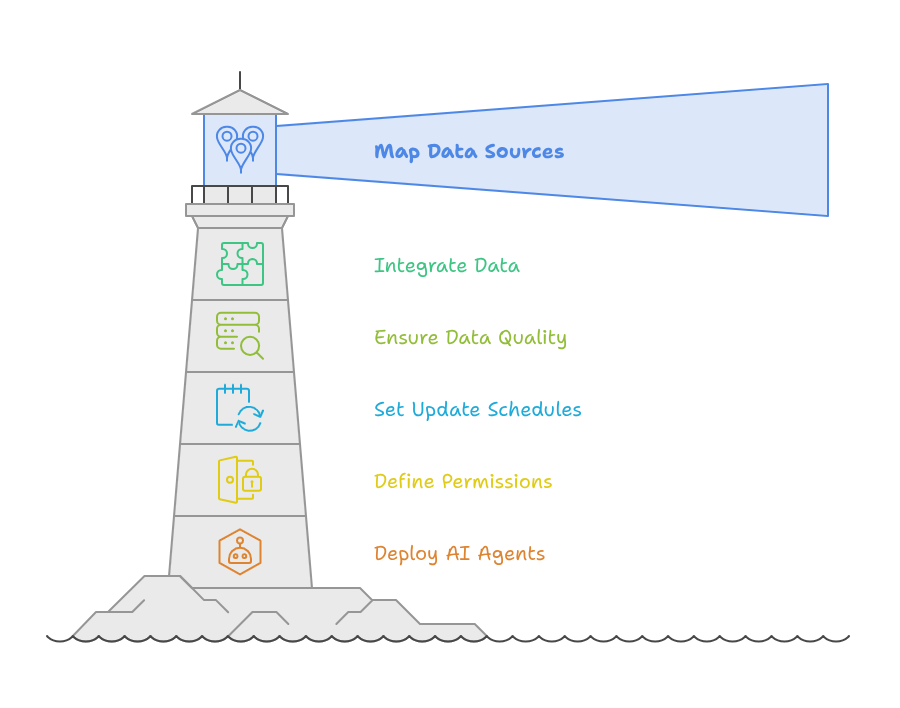
The phrase agentic AI unified data infrastructure explained describes the foundation behind autonomous AI actions. Agentic systems do more than answer questions. They plan steps, use tools, and complete tasks.
Because these systems take action, they need dependable data controls. They must know which record is current. They must also understand relationships between records.
When agentic AI unified data infrastructure explained clearly, the main message is simple. Intelligent action requires connected and trusted information.
Integration Comes Before Automation
Many companies begin with the chatbot or agent interface. However, the data foundation should come first. A polished interface cannot repair missing records.
Teams should map data sources before launching autonomous agents. They should identify duplicates, unclear ownership, and outdated information.
This makes agentic AI unified data infrastructure explained in practical business terms. It turns a technical idea into an implementation plan.
Data integration should also include clear update schedules. Otherwise, the agent may use old information during important decisions.
Real-time updates may be necessary for payments, inventory, or support requests. Daily updates may be enough for other reporting needs.
AI Agents Need Clear Permissions
An AI agent should not have unlimited access to every business record. Its permissions should match its role and responsibilities.
For example, a support agent may need customer tickets and product details. However, it may not need employee salary information.
Clear access rules protect sensitive data. They also reduce the risk of unwanted actions or incorrect updates.
This approach is an important part of agentic AI unified data infrastructure explained for modern businesses.
How to Prepare Your Business Data
List every system holding important business information. Then identify overlapping records and define the source of truth for key fields.
Remove duplicates, standardize common formats, and create role-based access for each agent.
Teams should also review missing fields and incomplete records. Poor data quality can weaken every AI response.
Next, define which information must update immediately. Other information may follow scheduled refresh cycles.
These steps support a reliable Zoho Analytics AI agent data architecture. They also explain why AI agents need unified data layer planning before deployment.
Businesses should test the agent with real scenarios before wider use. This helps teams identify missing data and incorrect relationships.
Regular reviews are also important. Business processes change, and the data structure should change with them.
Conclusion
AI agents become more useful when they access accurate, connected, and governed information. A connected data strategy provides that foundation. It improves context, reduces errors, and supports safer automation.
The benefits of unified data layer for AI systems include stronger decisions, better service, and improved control. It also proves how unified data improves AI agent accuracy across sales, finance, support, and operations.
A unified data layer AI approach also makes future growth easier. Businesses can add new applications without rebuilding every AI workflow.
Zoho can help businesses connect applications, improve reporting, and build practical automation. However, successful implementation still requires expert planning and customization. With iTecZone as a certified Zoho partner, your business gains experienced support across Zoho applications. Our developers can integrate, customize, and optimize the right solution. Therefore, iTecZone is a dependable choice as your Zoho Consultant Partner.
FAQ’s
What is a unified data layer AI approach?
It connects information from different systems within one consistent structure. This gives agents cleaner and more useful context.
Why do AI agents need connected data?
Connected data helps agents understand complete situations. It reduces mistakes caused by missing, duplicated, or outdated records.
How does unified data improve AI agent accuracy?
It provides cleaner and more complete context. Therefore, the agent can make decisions using stronger evidence.
What are the main benefits for AI systems?
The main benefits include better accuracy, safer automation, stronger governance, and more consistent customer experiences.
What does agentic AI unified data infrastructure explained mean?
It describes the integrations, controls, and data foundations required for autonomous AI systems to act safely.
Can Zoho support a unified AI data strategy?
Yes. Zoho applications can connect operational and analytical data for reporting, automation, and better decision-making.
Does a unified data layer replace existing applications?
No. It usually connects existing tools and creates a consistent view of their shared information.
How can iTecZone support AI and Zoho implementation?
iTecZone can plan, integrate, customize, and optimize Zoho applications according to specific business requirements.