A simple thank-you can make someone’s entire workday better. Yet many employees go weeks without hearing that their efforts matter.
Most businesses focus on targets, deadlines, and performance. While these are important, employees also want to feel respected, supported, and appreciated.
That’s where workplace appreciation makes a difference.
Recognizing employees doesn’t always require expensive rewards or formal celebrations. Sometimes, acknowledging someone’s hard work during a meeting is enough to make them feel valued.
However, appreciation works best when it becomes part of everyday workplace culture.
In this guide, we’ll explore 12 practical workplace appreciation ideas that businesses can use to recognize employees. We’ll also discuss how digital tools can make employee recognition easier to manage.
Why Workplace Appreciation Matters More Than You Think
Think about the last time someone appreciated your work. Maybe your manager thanked you for completing a difficult project. Perhaps a colleague acknowledged your help during a busy week.
That small moment probably made you feel good about your contribution.
Employees experience the same thing.
When people feel appreciated, they are more likely to feel connected to their workplace. They understand that their efforts matter and that their contributions aren’t going unnoticed.
A positive workplace culture also makes collaboration easier. Employees feel more comfortable sharing ideas, supporting colleagues, and participating in team activities.
On the other hand, a lack of recognition can create frustration. People may begin questioning whether their hard work makes any difference.
This is why businesses should treat employee appreciation as an ongoing practice rather than an occasional activity.
12 Practical Workplace Appreciation Ideas That Actually Work
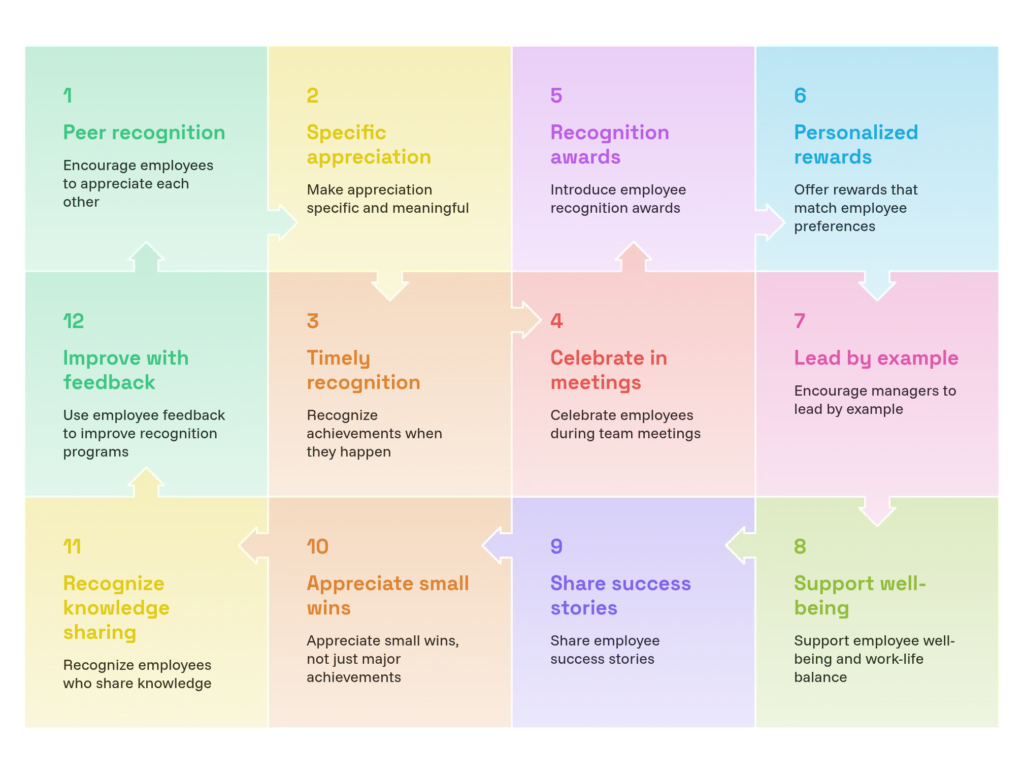
There isn’t one perfect way to appreciate every employee. Some people enjoy public recognition, while others prefer a personal message.
The following ideas can help businesses create a recognition program that feels genuine and inclusive.
1. Encourage Employees to Appreciate Each Other
Recognition shouldn’t always come from managers.
Employees work closely with their colleagues every day. They often notice helpful actions that leadership might miss.
For example, a team member might stay late to help a colleague finish an urgent assignment. Another employee might share knowledge that saves the entire team several hours.
These contributions deserve recognition.
Businesses can encourage peer-to-peer recognition through team meetings, internal communication channels, or dedicated appreciation groups.
A simple message explaining what someone did and why it mattered can make recognition more meaningful.
Over time, this practice helps employees appreciate teamwork rather than focusing only on individual achievements.
2. Make Appreciation Specific and Meaningful
Generic praise is nice, but specific recognition carries more value.
Instead of saying, “Great job,” explain what the employee accomplished.
For example, a manager could say:
“Thank you for helping the support team resolve those customer issues. Your quick response helped us meet the deadline.”
This tells employees exactly why their contribution mattered.
It also helps reinforce the behaviors businesses want to encourage.
Managers should recognize problem-solving, creativity, teamwork, customer service, and other contributions that support company values.
The more personal and specific the appreciation feels, the more meaningful it becomes.
3. Recognize Achievements When They Happen
Waiting until the annual performance review isn’t always the best approach.
Employees appreciate recognition when their efforts are still fresh.
Imagine a sales representative closing a difficult deal after weeks of follow-ups. A quick message from their manager can make that achievement feel even more rewarding.
Businesses can introduce immediate recognition through appreciation messages, small rewards, or quick team announcements.
These gestures don’t need to be expensive.
The important thing is acknowledging the achievement at the right time.
4. Celebrate Employees During Team Meetings
Team meetings are a great opportunity to recognize employee contributions.
Instead of discussing only targets and pending tasks, dedicate a few minutes to celebrating achievements.
Managers can highlight completed projects, excellent customer feedback, or examples of strong teamwork.
For instance, a weekly meeting could include a short appreciation segment.
Employees can also nominate colleagues who helped them during the week.
However, public recognition should always respect personal preferences. Some employees feel uncomfortable being praised in front of large groups.
Offering private recognition is equally important.
5. Introduce Employee Recognition Awards
Formal recognition programs can help businesses celebrate consistent performance and positive workplace behavior.
Awards don’t need to focus only on sales figures or productivity.
Businesses can recognize employees for teamwork, creativity, customer satisfaction, problem-solving, or mentoring.
For example, a company might introduce a monthly teamwork award.
Employees could nominate colleagues who regularly support others and contribute to a positive working environment.
The selection process should remain transparent and fair.
Otherwise, recognition programs can create unnecessary competition or make employees feel excluded.
6. Offer Rewards That Match Employee Preferences
Not every employee values the same reward.
Some appreciate gift cards, while others prefer additional time off or opportunities for professional development.
Businesses should understand what their employees actually enjoy.
For example, a team member interested in learning new skills might appreciate access to an online course.
Another employee might prefer flexible working hours after completing a demanding project.
Personalized rewards show that businesses recognize employees as individuals.
They also make appreciation feel more thoughtful than offering the same reward to everyone.
7. Encourage Managers to Lead by Example
A healthy appreciation culture starts with leadership.
If managers rarely acknowledge employee contributions, recognition programs may feel like another administrative activity.
Leaders should actively participate in appreciation initiatives.
They can thank employees during meetings, send personal messages, and recognize individuals who support their colleagues.
More importantly, appreciation should be sincere.
Employees can usually recognize the difference between genuine gratitude and praise given simply because company policy requires it.
When leaders consistently demonstrate appreciation, other team members are more likely to follow.
8. Support Employee Well-Being and Work-Life Balance
Appreciation isn’t limited to awards and compliments.
Sometimes, the best way to recognize employees is by respecting their personal time and well-being.
Businesses can offer flexible schedules, wellness activities, or additional rest after demanding projects.
For example, a manager might adjust deadlines when employees face unexpected personal responsibilities.
These actions demonstrate that the organization values people beyond their daily output.
However, wellness benefits shouldn’t replace fair workloads, supportive management, or reasonable expectations.
A positive workplace culture requires both appreciation and responsible leadership.
9. Share Employee Success Stories
Every workplace has stories worth sharing.
Perhaps a customer support representative solved a complicated issue. Maybe a developer found a simpler way to complete a recurring task.
Sharing these experiences helps employees understand how their work contributes to business success.
Companies can publish employee stories through internal newsletters, team channels, or company meetings.
The focus should remain on the person’s contribution and its impact.
For example, a short story could explain how two departments worked together to deliver a project successfully.
This approach celebrates individual effort while encouraging collaboration across teams.
10. Appreciate Small Wins, Not Just Major Achievements
Big achievements usually receive attention.
Businesses celebrate successful product launches, major sales, and completed projects.
But what about the smaller contributions that make those achievements possible?
An employee who helps onboard a new colleague deserves appreciation. So does someone who identifies a problem before it affects customers.
Recognizing these everyday actions helps create a more supportive workplace.
Managers can make this a habit by noticing small improvements and acknowledging consistent effort.
The goal isn’t to praise every routine task.
It’s to ensure meaningful contributions don’t go unnoticed simply because they aren’t attached to major milestones.
11. Recognize Employees Who Share Knowledge
Knowledge sharing is one of the most valuable contributions employees can make.
Experienced team members often help colleagues understand complicated processes or learn new tools.
Likewise, younger employees may introduce fresh ideas and new technologies.
Businesses can encourage this exchange through mentoring programs, internal workshops, and collaborative learning sessions.
For example, a junior employee might teach colleagues how to use a new productivity tool.
Recognizing these contributions shows that expertise matters at every organizational level.
It also creates an environment where employees feel comfortable learning from one another.
12. Use Employee Feedback to Improve Recognition Programs
Even well-planned appreciation programs need improvement.
Businesses shouldn’t assume every employee enjoys the same recognition activities.
Some employees may prefer private feedback. Others might value professional development opportunities more than financial rewards.
Regular surveys and informal conversations can help identify these preferences.
Managers can ask employees whether recognition feels fair, meaningful, and consistent.
Businesses should also review participation across departments.
If only a small group receives recognition, the program may need adjustments.
Listening to employee feedback helps companies create appreciation practices that work for everyone.
How Technology Can Make Employee Appreciation Easier
Managing employee recognition becomes more challenging as a business grows.
In a small office, managers may remember birthdays, achievements, and important milestones without much difficulty.
However, larger organizations often have multiple departments, remote employees, and different reporting structures.
Important contributions can easily go unnoticed.
This is where employee recognition software and digital collaboration tools become useful.
Businesses can use technology to share appreciation messages, collect feedback, organize announcements, and maintain employee records.
Digital platforms also help remote teams participate in recognition activities.
Instead of relying entirely on occasional meetings, employees can celebrate achievements through shared communication channels.
However, technology should support genuine appreciation rather than replace personal interaction.
A thoughtful message from a manager still matters more than an automated notification without personal meaning.
How Zoho Applications Can Support a Positive Workplace Culture
Businesses already using Zoho can explore several applications to support employee engagement and internal communication.
Zoho People for Employee Management
Zoho People helps businesses manage employee information, performance processes, and other HR activities.
Depending on the features and configuration used, organizations can support performance feedback and employee development.
This helps managers maintain better visibility into employee progress and achievements.
Zoho Connect for Team Communication
Zoho Connect provides a shared space where employees can communicate, collaborate, and exchange information.
Teams can use internal groups and discussions to share achievements and acknowledge helpful contributions.
For example, a company could create a dedicated appreciation group where employees recognize their colleagues.
This makes recognition more accessible across departments and remote teams.
Zoho Cliq for Everyday Appreciation
Zoho Cliq supports real-time team messaging and workplace collaboration.
Managers and employees can use team channels to celebrate milestones, share positive feedback, and acknowledge contributions.
A quick appreciation message can reach colleagues without requiring a formal meeting.
When used thoughtfully, these tools can help businesses make recognition a natural part of daily communication.
How to Build an Employee Appreciation Program That Lasts
Starting a recognition program is relatively easy. Keeping employees interested over time requires more planning.
The first step is understanding what appreciation means to your team.
Businesses can begin with a simple employee survey. Ask which recognition methods employees prefer and what improvements they would like to see.
Next, establish a few clear practices.
For example, managers could recognize meaningful contributions during weekly meetings. Employees could also share appreciation messages through internal communication channels.
It’s important to keep the process simple.
Complicated nomination forms and unnecessary approval steps can discourage participation.
Businesses should also ensure that recognition remains fair.
Employees working behind the scenes deserve appreciation just as much as customer-facing teams.
Finally, review the program regularly.
Look at employee feedback, participation, and overall engagement. Use these insights to make improvements rather than continuing activities that employees no longer find valuable.
Common Employee Appreciation Mistakes to Avoid
Even positive initiatives can create problems when handled poorly.
One common mistake is recognizing only top-performing employees. While strong performance deserves appreciation, teamwork and consistent effort also matter.
Another mistake is relying entirely on financial rewards.
Bonuses and gifts can be helpful, but employees also value respect, trust, professional growth, and constructive feedback.
Businesses should also avoid making appreciation feel forced.
Requiring managers to send generic praise messages every day can reduce their meaning.
Finally, appreciation shouldn’t be used to ignore workplace problems.
Employees still need fair compensation, manageable workloads, and supportive leadership.
Recognition works best when these fundamentals are already being addressed.
Final Thoughts: Build a Workplace Where People Feel Valued
A positive workplace culture doesn’t develop through occasional celebrations alone.
It grows through everyday actions, supportive leadership, open communication, and genuine appreciation.
Businesses don’t need large budgets to get started. Recognizing small achievements, encouraging peer appreciation, and listening to employees can make a meaningful difference.
As organizations grow, digital tools can help them maintain these practices across different teams.
Zoho applications provide useful options for managing employees, improving communication, and supporting collaboration. However, choosing and configuring the right tools requires careful planning.
As a certified Zoho partner, iTecZone helps businesses implement, customize, and integrate Zoho applications according to their operational needs.
Our experienced team can help you build connected workflows, improve internal communication, and make better use of your Zoho investment.
Want to create a more connected and productive workplace? Contact iTecZone to discuss the right Zoho solutions for your business.
Frequently Asked Questions
1. What are the best workplace appreciation ideas?
Some effective workplace appreciation ideas include peer recognition, personalized rewards, employee awards, and public appreciation during team meetings. Businesses can also recognize small achievements, offer development opportunities, and encourage managers to provide meaningful feedback.
2. How can companies appreciate employees without spending money?
Employee appreciation doesn’t always require financial rewards. Managers can write personal thank-you messages, recognize achievements during meetings, and offer professional development opportunities. Flexible scheduling and genuine acknowledgment can also make employees feel valued.
3. Why is employee appreciation important for workplace culture?
Employee appreciation helps people feel respected and recognized for their contributions. It can support stronger workplace relationships, improve communication, and encourage collaboration. Consistent recognition also helps reinforce positive behaviors across teams.
4. How often should managers recognize employees?
Managers should recognize meaningful contributions whenever they occur. Appreciation doesn’t need to follow a strict schedule. However, regular feedback and recognition during team meetings can help ensure employees receive consistent acknowledgment.
5. What is the difference between employee recognition and employee appreciation?
Employee recognition usually focuses on specific achievements, results, or contributions. Employee appreciation is broader and acknowledges someone’s value as a person and team member. Both approaches help create a supportive workplace.
6. How can remote teams improve employee appreciation?
Remote teams can use communication platforms to share appreciation messages, celebrate achievements, and recognize colleagues. Virtual meetings and personalized feedback also help employees feel connected. Tools like Zoho Connect and Zoho Cliq can support these activities.
7. How can small businesses create an employee recognition program?
Small businesses can begin by asking employees how they prefer to receive appreciation. They can then introduce simple practices such as weekly recognition, peer appreciation, and milestone celebrations. The program should remain fair, consistent, and easy to manage.
8. How can businesses measure employee appreciation?
Businesses can measure appreciation through employee surveys, recognition participation, feedback, and engagement trends. Retention and turnover data may also provide useful context. These measures should be reviewed together rather than treated as direct proof of success.
9. Can Zoho help businesses manage employee engagement?
Yes. Zoho offers applications that support employee management, communication, and collaboration. Zoho People, Zoho Connect, and Zoho Cliq can help businesses organize relevant processes and encourage team interaction. Available features depend on the applications and plans selected.
10. What makes an employee appreciation program successful?
A successful program should be genuine, inclusive, consistent, and aligned with employee preferences. Leadership participation and regular feedback are also important. Businesses should recognize different types of contributions rather than focusing only on individual performance.