Choosing a CRM is easy, but making it work across your business is much harder. CRM implementation consultant services provide the planning and guidance needed for a successful launch. The right CRM implementation consultant services also reduce delays, confusion, and expensive changes after implementation.
What Are CRM Consultant Services?
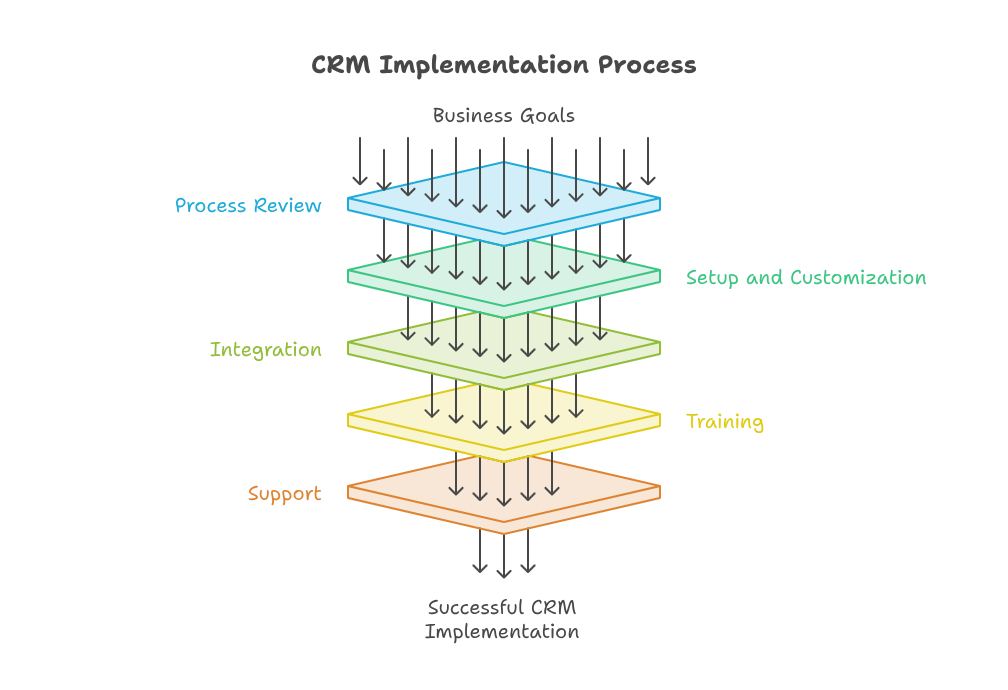
CRM consultant services help businesses plan, configure, customize, integrate, and improve customer relationship management systems. The work can include process reviews, migration, automation, training, reporting, and support.
A consultant studies how teams manage leads, customers, tasks, and communication. Then, they design a setup around business goals.
Business Process Review
The project usually begins with a review of current processes. The consultant examines sales stages, lead sources, follow-ups, approvals, and reporting needs.
This review identifies gaps, repeated tasks, and outdated processes before setup begins.
CRM Setup and Customization
Every business has different requirements. Therefore, a standard setup may not support every team or customer journey.
A skilled CRM specialist can create fields, modules, layouts, dashboards, permissions, and workflow rules. Good customization keeps the system useful without making it difficult.
Why Businesses Need a CRM Consulting Company
Many companies buy a powerful CRM but struggle to use it properly. Records remain incomplete, users avoid the system, and reports become unreliable.
A dependable CRM consulting company provides a clear path from planning through launch. The consultant keeps business goals behind each technical decision.
Better User Adoption
Employees often resist a CRM when it feels complicated or unrelated to their work. Clear workflows and practical training can change that experience.
CRM consultant services simplify common actions and provide role-based training. As a result, users understand what to enter and why it matters.
Cleaner Data and Better Reports
Old spreadsheets may contain duplicate, missing, or outdated information. Moving that data without cleaning creates bigger problems later.
A certified CRM expert can prepare records before migration and create rules for future data quality. Clean data supports accurate reports and better decisions.
Benefits of CRM Implementation Consultant Services
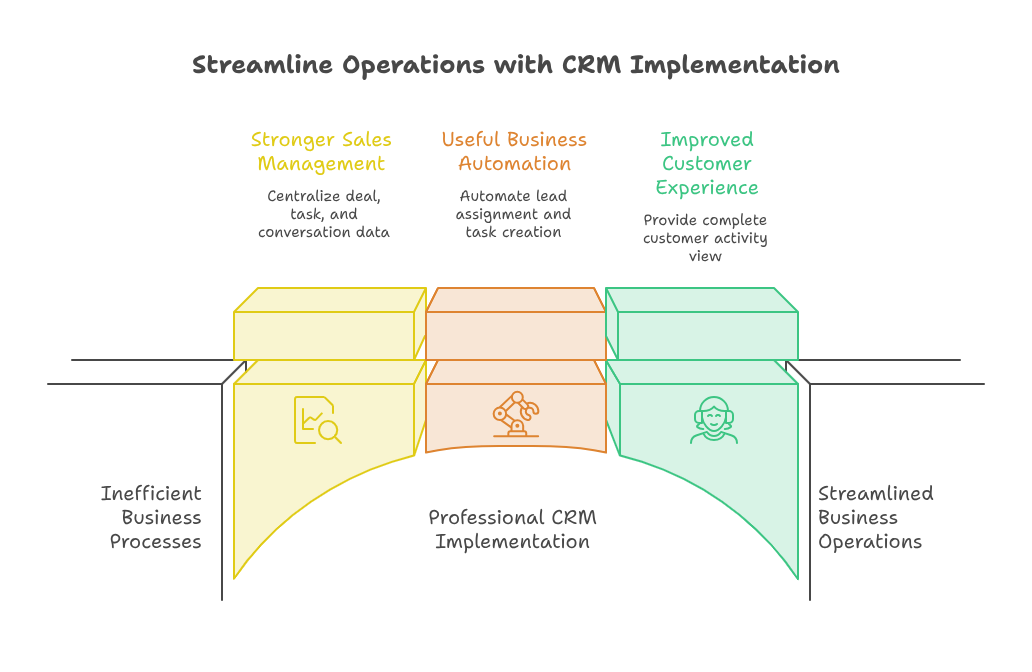
Professional CRM implementation consultant services improve sales control, customer response, internal coordination, and management reporting. They also reduce the risk of a failed rollout.
Stronger Sales Management
A well-designed CRM shows every deal, task, conversation, and follow-up in one place. Salespeople can focus on opportunities instead of searching through emails.
The consultant can build stages that reflect your actual sales process. Managers can then identify delayed deals and provide timely support.
Useful Business Automation
Manual work slows teams and creates avoidable mistakes. CRM automation can assign leads, send alerts, update records, and create follow-up tasks.
However, too much automation can confuse users. A CRM consulting company can build simple rules that save time without reducing control.
Improved Customer Experience
Customers expect quick answers and consistent communication. They should not repeat the same details whenever they contact another department.
A connected CRM provides a complete view of customer activity. With help from a certified CRM expert, teams can deliver faster service.
Practical CRM Implementation Use Case
Consider a home services company receiving leads through forms, calls, social media, and referrals. The sales team records each source differently.
Some leads receive quick replies, while others remain unnoticed. Managers also cannot measure conversions or compare employee performance.
The business hires an experienced consultant to organize the process. The consultant creates one database and a clear sales pipeline.
Website leads enter the CRM automatically. Each enquiry receives an owner based on location, service type, and availability.
The system creates follow-up tasks and alerts managers about delayed responses. Dashboards show new leads, active deals, conversions, and expected revenue.
Email and support tools are also connected. Employees can now review previous conversations before contacting a customer.
After launch, the company responds faster and loses fewer opportunities. Managers make decisions using current information instead of incomplete spreadsheets.
This example shows why CRM consultant services should solve specific operational problems. Technology creates value when it supports daily work.
How to Choose the Right CRM Consulting Company
The right partner should understand business operations, not only software features. Technical knowledge matters, but practical thinking matters equally.
A strong CRM consulting company asks detailed questions before suggesting solutions. It explains recommendations clearly and avoids unnecessary customization.
Review Relevant Experience
Look for consultants with experience in your industry or business model. Relevant knowledge can reduce discovery time and improve the final design.
Review case studies, client feedback, and previous implementations. These details reveal the consultant’s practical ability.
Choose a Certified CRM Expert
A certified CRM expert understands platform features, configuration standards, and recommended practices.
Still, certification should be supported by real project experience. The best experts combine technical skills with communication and business thinking.
Confirm Post-Launch Support
CRM work rarely ends on the launch date. Teams may need new reports, workflow changes, extra training, or integrations.
Reliable CRM consultant services should include suitable support options. Ongoing assistance helps the system stay aligned with business growth.
Common CRM Implementation Mistakes
Rushing the setup is a common mistake. A fast launch may look attractive, but weak planning creates long-term problems.
Businesses also copy outdated processes or add excessive fields and notifications. Poor training then reduces adoption and data quality.
Working with a certified CRM expert helps reduce these risks. Testing, user feedback, and phased delivery create a smoother launch.
Conclusion
A successful CRM project requires clear goals, clean data, useful automation, simple workflows, and proper training. Software alone cannot deliver these results.
Professional guidance connects business needs with the right technical setup. It improves adoption, reporting, sales visibility, customer service, and long-term value.
Zoho can connect sales, marketing, finance, support, and operations within one flexible business ecosystem. However, expert implementation and customization remain essential. With iTecZone as a certified Zoho partner, you receive trusted support across major Zoho applications. Our experienced developers create solutions around your processes, goals, and growth plans. This makes iTecZone the right Zoho Consultant Partner for your business.
FAQ’s
What does a CRM specialist do?
The consultant plans, configures, customizes, tests, and launches the CRM. They may also manage migration, integrations, automation, training, and support.
How long does CRM implementation take?
The timeline depends on company size, data volume, integrations, and customization. Simple projects may take weeks, while complex projects need longer.
Why should a business hire a CRM consultant?
Professional consulting reduces setup mistakes and improves user adoption. It also creates processes that match real business requirements.
What should a CRM consulting partner provide?
It should provide process analysis, planning, setup, testing, training, and post-launch support. Communication should remain clear throughout the project.
Why does CRM certification matter?
Certification confirms platform knowledge and implementation skills. It can also support safer and more scalable configuration choices.
Can a CRM improve sales performance?
Yes. A proper CRM improves lead tracking, follow-ups, pipeline visibility, and reporting. These improvements help sales teams work more effectively.